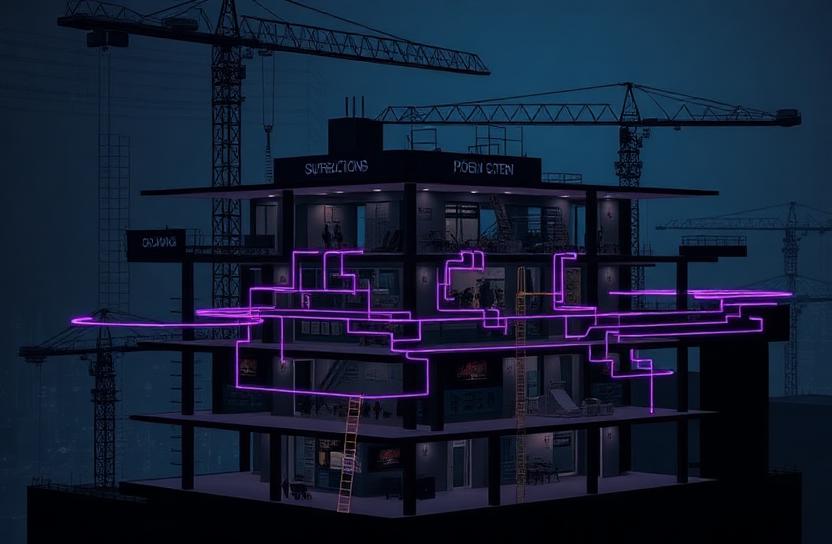
Internal Workflow Systems: The Infrastructure Your Construction Company Is Missing
Most construction companies have project management software. Almost none have internal workflow systems. That gap is where operational efficiency lives.
The Missing Layer
Construction companies spend significant money on external facing technology. Project management platforms. Accounting software. Estimating tools. Scheduling applications.
What they rarely invest in is the internal infrastructure that makes all of those tools work together. The workflow systems that route approvals, synchronize data, generate reports, and manage the internal processes that keep the company running.
This is the missing layer. And it's the difference between a company that scales smoothly and one that adds people every time it adds projects.
What Internal Workflow Systems Do
Internal workflow systems handle the operational processes that commercial software doesn't address:
Cross system data flow. When a change order is approved in your PM software, internal workflow systems ensure that the budget updates in accounting, the schedule adjusts, the client gets notified, and the project dashboard reflects the change. Automatically.
Internal approval chains. Your company's specific authority matrix for purchases, subcontract awards, design decisions, and scope changes. These approval chains are unique to your organization and rarely match what any commercial platform offers.
Document lifecycle management. From creation through review, revision, approval, and distribution. Not just storing documents, but managing the process of getting them from draft to final with all the right reviews along the way.
Exception handling. Automated systems for identifying and escalating issues that need attention. Budget thresholds exceeded. Schedule milestones missed. Safety observations requiring immediate action.
Operational reporting. Custom dashboards and reports that pull data from multiple systems to show leadership what they need to see. Not canned reports from individual platforms, but views designed around your specific KPIs and decision making process.
Why Commercial Software Doesn't Cover This
Commercial construction software is built to handle individual functions well. Procore manages projects. Sage manages finances. Bluebeam manages drawings. Each does its job.
But none of them manage the connections between jobs. None of them understand your company's specific operational logic. None of them know that when a change order over $50,000 gets approved on a healthcare project, it needs to trigger a different notification chain than one on a retail build.
That operational logic, the rules that govern how your company works, lives in your internal workflow systems. Or, more commonly, it lives in the heads of your experienced staff and gets executed manually every time.
The Cost of Not Having Internal Systems
When internal workflow systems don't exist, your people become the system:
Admin staff manually move data between platforms. PMs spend hours each week routing documents and compiling reports. Executives make decisions based on information that's days or weeks old because the data hasn't been compiled yet.
These costs are real but invisible. They don't show up as a line item on your P&L. They show up as overhead that grows with every project, as slower decision making, as errors from manual processes, and as institutional knowledge that walks out the door when experienced people leave.
Building Internal Workflow Systems
The approach is iterative:
Phase 1: Standardize. Before you automate, standardize. Define your approval authorities. Document your routing rules. Create templates for recurring processes. You can't automate what isn't defined.
Phase 2: Digitize. Move standardized processes into digital systems. This might mean custom forms, simple workflow tools, or purpose built applications depending on complexity.
Phase 3: Integrate. Connect your workflow systems to your commercial platforms. Change orders approved in the workflow system should update budgets in accounting. Field reports submitted through the workflow should appear on project dashboards.
Phase 4: Optimize. With digital workflows generating data, you can measure performance. Which processes are slow? Where are the bottlenecks? What exceptions occur most often? Use data to continuously improve.
What This Looks Like When It Works
A construction company with good internal workflow systems operates differently:
New projects spin up with standardized workflows already in place. The team doesn't have to figure out "how do we do things on this project" because the systems define the process.
Information flows between systems without human intervention. Data entered once appears everywhere it needs to be. Reports compile themselves from live data.
Exceptions and issues surface automatically. Nobody has to monitor spreadsheets or remember to follow up. The system identifies what needs attention and routes it to the right person.
Leadership makes decisions based on current data. Not monthly reports. Not end of project reconciliations. Real time information from across the organization.
The Bottom Line
Internal workflow systems are the operational infrastructure that holds everything together. They're not glamorous. They don't have marketing websites with flashy demos. But they're what separates construction companies that scale efficiently from ones that just keep adding people to manage the chaos.
Every company that reaches a certain size either builds this infrastructure intentionally or pays the ongoing cost of operating without it. The cost of not having it only grows.
Ready to build a tech stack that fits your operation?
Let's talk about what your company actually needs.
Start the ConversationStack Exposure Calculator
Add up what you're actually paying for software subscriptions. No hidden multipliers, just your tools and your total.
See Your ExposureOperational Leakage Model
Estimate what your workflow structure costs in wasted time, duplicate effort, and labor leakage every month.
Model Your LeakageWe build this
More in Workflow Automation
Construction Workflow Automation: A Practical Guide for Contractors
Workflow automation in construction means building systems that move information, approvals, and decisions through your company without someone having to manually push every step forward.
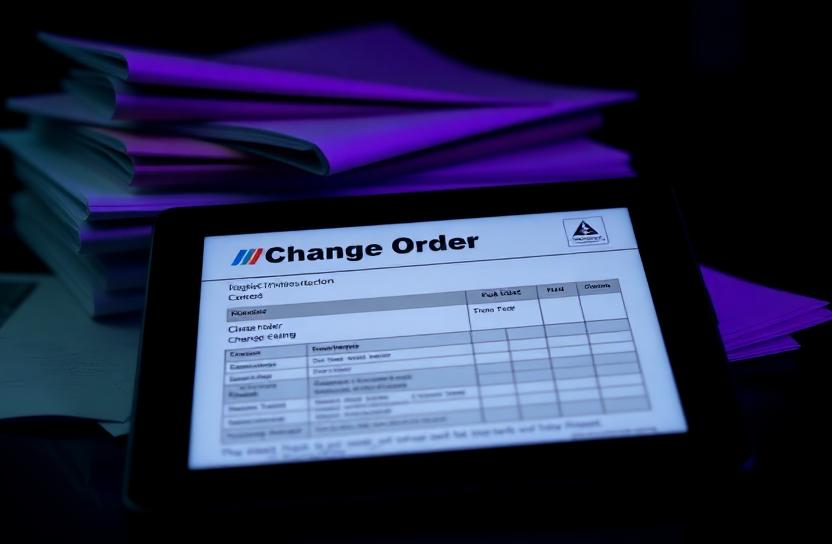
Automating Change Orders in Construction: Stop Losing Money on Manual Processes
Change orders are where construction companies lose money they don't even know they're losing. Automating the process isn't optional for growing contractors.

Automating Field Reporting: Getting Real Data from the Jobsite to the Office
Field reports are only valuable if they actually reach the people who need them in a format they can use. Most construction companies fail at this basic requirement.

Construction Approval Workflows: How to Stop Bottlenecks from Killing Your Schedule
Approval bottlenecks are one of the most expensive problems in construction. Most of them are completely avoidable with the right workflow systems.

Construction Process Automation: A Practical Approach for Growing Companies
Process automation in construction doesn't require a massive digital transformation. It starts with one broken process and a commitment to fixing it properly.

Workflow Routing for Contractors: Getting Information to the Right Person Automatically
Most information in a construction company gets to the right person eventually. The problem is 'eventually' costs time, money, and sometimes projects.

What Is Workflow-First Construction Software
Workflow-first means building software around how your crews actually work; not forcing your operation into someone else's template. Here's what that looks like in practice.

Designing Software Around How Crews Actually Work
Software designed in offices for office people fails in the field. Construction software must be designed around the realities of crew-level operations.

Field-Driven Software Design Explained
Field-driven design means the people who do the work define what the software does. It's the only approach that produces tools construction teams actually use.
How Construction Workflows Should Drive Technology
Technology should serve your workflows, not define them. When you let software vendors dictate how your company operates, you lose what makes you competitive.

Why Process Mapping Comes Before Platforms
Buying software before mapping your processes is like buying materials before reading the plans. Process mapping is the foundation for every good technology decision.

Turning Construction SOPs Into Software Systems
Your standard operating procedures should drive your software, not sit in a binder nobody reads. Here's how to translate operational standards into working digital systems.
Workflow Engineering for Contractors
Workflow engineering is the discipline of designing, building, and continuously improving the operational processes that run your construction company.

How to Digitize a Construction Workflow Correctly
Digitizing a workflow isn't just moving paper to screens. Done right, it transforms how information flows. Done wrong, it's expensive digital paperwork.

The Right Way to Modernize Construction Operations
Modernizing construction operations isn't about buying new technology. It's about intentionally redesigning how your company works and building technology to support it.

Custom Workflow Systems vs Templates
Templates promise quick implementation. Custom systems deliver lasting fit. Understanding the tradeoff helps you choose the right approach for your construction company.

The Construction Workflow Audit Guide
A workflow audit reveals where your operations are leaking time, money, and accuracy. This guide walks you through auditing your construction workflows step by step.
Why Field Context Matters in Software Design
Software designed without field context misses the environment, constraints, and realities that determine whether technology gets used or abandoned.

Software That Understands Change Orders, Not Just Tickets
Generic project management tools treat change orders like tickets. Construction-native software understands the financial, contractual, and operational implications of every scope change.

Why Construction Communication Drives Software Design
How construction teams communicate should determine how construction software is designed. Most software ignores this and fails because of it.
Construction Is Workflow Dense, Not Feature Dense
Construction doesn't need software with more features. It needs software that handles complex, interconnected workflows. The difference determines whether technology helps or hinders.