
Why Your Software Should Match Your Process, Not Replace It
The best construction companies have refined their processes over years. Software should amplify what works, not force you to start over with someone else's template.
Your Process Is an Asset
Every successful construction company has something in common: refined operational processes that have been shaped by real project experience. How you handle submittals, how you manage change orders, how your supers communicate with the office. These processes exist because they work.
When software forces you to abandon those processes, you are not just changing tools. You are discarding operational knowledge that took years to develop.
A Field Example
A concrete contractor had a change order process that involved three steps: field identification, PM review with cost estimate, and client approval with a signed form. The entire process took 48 hours because it was designed around the speed their clients expected.
Their new software platform required a seven step digital workflow with multiple approval gates, document attachments at each stage, and notifications that needed responses before the next step could proceed. What used to take two days now took five.
The software was not wrong. It was designed for companies with different approval requirements. But for this contractor, it replaced a fast, effective process with a slower, more bureaucratic one.
Why Process Replacement Fails
Institutional knowledge gets erased. Your processes carry embedded lessons from past mistakes and successes. When you replace them with software defaults, those lessons disappear.
Speed usually decreases. Custom processes evolve toward efficiency because your team eliminates friction naturally over time. Generic processes have not been optimized for your specific operation.
Resistance is rational. When experienced professionals push back on new software, they are often right. They know their current process works and they can see that the new one is worse for their specific context.
Retraining has diminishing returns. You can train someone to use new software. You cannot quickly rebuild the operational intuition that made your old process effective.
The Correct Approach
Start with your existing processes and ask: where does technology make this better?
1. Map your top workflows from trigger to completion
2. For each step, identify whether it is manual, automated, or a hybrid
3. Find the steps where errors happen, time gets wasted, or information gets lost
4. Apply technology specifically to those pain points
5. Keep the steps that already work well, even if they are not "digital"
Quick Checklist
- Have you documented your current processes before shopping for software?
- Are you clear on which steps work well and which need improvement?
- Does the software you are considering allow you to configure workflows, not just use their defaults?
- Can you implement the software without changing the parts of your process that already work?
- Is your team involved in defining what "better" looks like?
The Bottom Line
Your process is not a problem to be solved. It is an asset to be enhanced. Software should make your good processes faster and more reliable, not replace them with generic alternatives. Build technology around how you work, not the other way around.
Ready to build a tech stack that fits your operation?
Let's talk about what your company actually needs.
Start the ConversationStack Exposure Calculator
Add up what you're actually paying for software subscriptions. No hidden multipliers, just your tools and your total.
See Your ExposureOperational Leakage Model
Estimate what your workflow structure costs in wasted time, duplicate effort, and labor leakage every month.
Model Your LeakageWe build this
More in SaaS vs Custom Software

When SaaS Fails Contractors: Why Off the Shelf Software Stops Working
SaaS tools work great until they don't. Here's why growing contractors hit the wall with generic software and what to do about it.
Custom vs SaaS Construction Software: Making the Right Choice
The choice between custom and SaaS isn't binary. The best construction tech stacks use both. The question is which workflows need which approach.

The Limits of Construction Software Platforms: What They Won't Tell You
Construction software platforms are good at what they do. But what they don't do is where most contractors struggle. Understanding those limits saves time and money.

Why Contractors Outgrow SaaS: The Growth Ceiling Nobody Talks About
SaaS platforms help contractors get organized. But organization and operational efficiency are different things. Growing companies need more than what generic software provides.
Hybrid Tech Stacks in Construction: The Best of Both Worlds
The most effective construction tech stacks aren't all SaaS or all custom. They're purposeful hybrids that use the right approach for each layer of the operation.

Why Off the Shelf Construction Software Breaks Real Workflows
Generic construction platforms force your team into someone else's process. Here is why that kills productivity and what to do instead.
The Hidden Cost of All in One Construction Platforms
All in one platforms promise simplicity but deliver bloat, rigidity, and hidden operational costs that compound over time.

Why Contractors Quit Software After 6 Months
Most construction software adoption fails within the first six months. The reason is not the technology. It is the mismatch between how the software works and how your company works.

Software Adoption Failure in Construction: The Real Reason
The construction industry has the lowest software adoption rates of any major sector. The reason is not resistance to change. It is software that ignores how the work actually gets done.
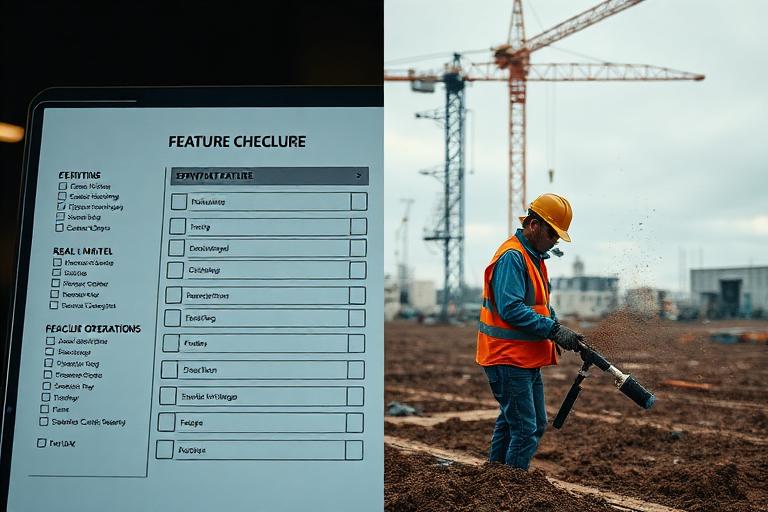
Why Feature Lists Don't Equal Field Results
A long feature list does not mean a platform will work for your operation. What matters is whether those features solve the specific problems your team faces every day.

The Myth of Plug and Play Construction Software
No construction software is truly plug and play. Every implementation requires configuration, training, and adaptation. The question is who adapts: the software or your team.
When Standardization Helps and When It Hurts Operations
Standardization is valuable when it eliminates waste. It becomes destructive when it forces your team to abandon processes that actually work.

Construction Tech Fatigue Is Real: Here's Why
Too many platforms, too many logins, too many promises. Construction teams are exhausted by technology that adds complexity without delivering value.
Why Most Construction SaaS Is Built Backwards
Most construction software starts with what looks good in a demo, not what works in the field. That backwards approach is why adoption rates stay low across the industry.
Why Static Software Hurts Growing Contractors
Software that can't adapt to your changing operations becomes an expensive constraint. Growing contractors need technology that scales and flexes with their business.