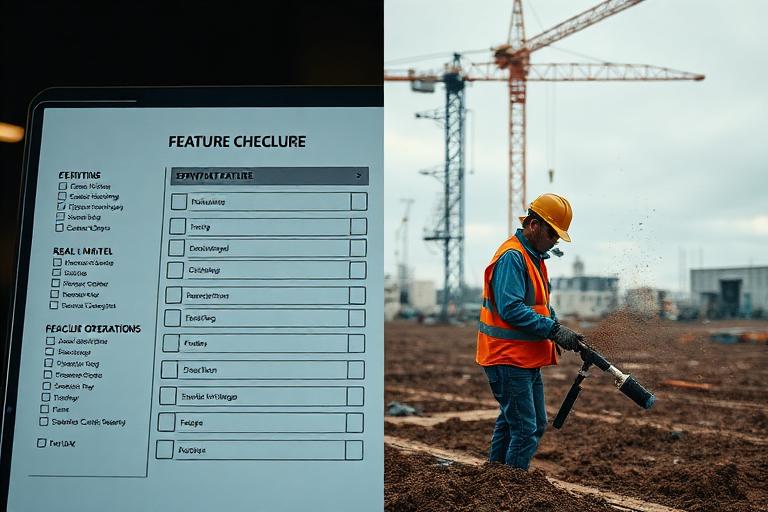
Why Feature Lists Don't Equal Field Results
A long feature list does not mean a platform will work for your operation. What matters is whether those features solve the specific problems your team faces every day.
The Feature List Trap
Software vendors compete on feature count. "200+ features" sounds impressive in a demo. Comparison charts with green checkmarks make it look like the platform can do everything.
But features on a list and features that work in your operation are two different things. The question is never "does it have this feature?" The question is "does this feature work the way my team needs it to?"
A Field Example
A commercial HVAC contractor evaluated three platforms. All three had "change order management" listed as a feature. On paper, they looked identical.
In practice, one required manual PDF generation and email. Another automated the creation but had no approval workflow. The third had approvals but could not handle the contractor's multi level sign off process that involved the PM, the super, and the client's rep.
All three had the feature. None of them actually solved the problem.
The Cost of Feature Blindness
False confidence. Checking a box on a comparison chart creates the illusion that a problem is solved. The team does not realize the feature is inadequate until they are months into implementation.
Wasted evaluation time. Hours spent comparing feature lists could be spent defining your actual operational requirements. The comparison approach leads you to the platform with the most features instead of the one with the right features.
Implementation surprises. The gap between "has the feature" and "the feature works for us" only becomes visible after you have committed. Contracts are signed, data is migrated, and then you discover the feature is a checkbox, not a solution.
The Correct Approach
Replace feature list comparison with workflow based evaluation.
1. Map your top five workflows in detail, including every step, decision point, and handoff
2. For each workflow, define exactly what software needs to do at each step
3. Test each platform against those specific requirements with real scenarios
4. Evaluate based on how well the platform handles your actual process, not how many features it lists
Quick Checklist
- Have you tested the specific features you need with your actual data and scenarios?
- Can the platform handle the exceptions and edge cases that define your real workflow?
- Does the vendor demo show your use case or just their standard presentation?
- Have you talked to a reference customer in your same trade and size range?
- Can you trial the platform for 30 days with a real project before committing?
The Bottom Line
Features are not capabilities. A feature list tells you what the software claims to do. A workflow test tells you what it actually does for your operation. Stop comparing lists and start testing fit.
Ready to build a tech stack that fits your operation?
Let's talk about what your company actually needs.
Start the ConversationStack Exposure Calculator
Add up what you're actually paying for software subscriptions. No hidden multipliers, just your tools and your total.
See Your ExposureOperational Leakage Model
Estimate what your workflow structure costs in wasted time, duplicate effort, and labor leakage every month.
Model Your LeakageWe build this
More in SaaS vs Custom Software

When SaaS Fails Contractors: Why Off the Shelf Software Stops Working
SaaS tools work great until they don't. Here's why growing contractors hit the wall with generic software and what to do about it.
Custom vs SaaS Construction Software: Making the Right Choice
The choice between custom and SaaS isn't binary. The best construction tech stacks use both. The question is which workflows need which approach.

The Limits of Construction Software Platforms: What They Won't Tell You
Construction software platforms are good at what they do. But what they don't do is where most contractors struggle. Understanding those limits saves time and money.

Why Contractors Outgrow SaaS: The Growth Ceiling Nobody Talks About
SaaS platforms help contractors get organized. But organization and operational efficiency are different things. Growing companies need more than what generic software provides.
Hybrid Tech Stacks in Construction: The Best of Both Worlds
The most effective construction tech stacks aren't all SaaS or all custom. They're purposeful hybrids that use the right approach for each layer of the operation.

Why Off the Shelf Construction Software Breaks Real Workflows
Generic construction platforms force your team into someone else's process. Here is why that kills productivity and what to do instead.

The Hidden Cost of All in One Construction Platforms
All in one platforms promise simplicity but deliver bloat, rigidity, and hidden operational costs that compound over time.

Why Contractors Quit Software After 6 Months
Most construction software adoption fails within the first six months. The reason is not the technology. It is the mismatch between how the software works and how your company works.

Software Adoption Failure in Construction: The Real Reason
The construction industry has the lowest software adoption rates of any major sector. The reason is not resistance to change. It is software that ignores how the work actually gets done.

The Myth of Plug and Play Construction Software
No construction software is truly plug and play. Every implementation requires configuration, training, and adaptation. The question is who adapts: the software or your team.
When Standardization Helps and When It Hurts Operations
Standardization is valuable when it eliminates waste. It becomes destructive when it forces your team to abandon processes that actually work.

Why Your Software Should Match Your Process, Not Replace It
The best construction companies have refined their processes over years. Software should amplify what works, not force you to start over with someone else's template.

Construction Tech Fatigue Is Real: Here's Why
Too many platforms, too many logins, too many promises. Construction teams are exhausted by technology that adds complexity without delivering value.
Why Most Construction SaaS Is Built Backwards
Most construction software starts with what looks good in a demo, not what works in the field. That backwards approach is why adoption rates stay low across the industry.
Why Static Software Hurts Growing Contractors
Software that can't adapt to your changing operations becomes an expensive constraint. Growing contractors need technology that scales and flexes with their business.