
What AI Can and Cannot Do in Construction Ops
A practical, no-hype breakdown of what AI is genuinely capable of in construction operations today, and what it absolutely cannot do no matter what vendors claim.
The Problem
The AI conversation in construction lacks nuance. Vendors oversell capabilities. Skeptics dismiss everything. Contractors are left without practical guidance on what AI can realistically do for their operations today.
What AI Can Do
Analyze documents at scale. AI can review specs, submittals, contracts, and drawings for completeness, conflicts, and compliance faster than humans. It catches things that get missed in manual review. This is one of the most mature and proven AI applications in construction.
Identify patterns in historical data. Given structured data from multiple projects, AI can find correlations between project characteristics and outcomes. Which factors predict budget overruns? What conditions correlate with schedule delays? These insights improve planning and risk management.
Automate routine categorization. AI can learn to sort incoming documents, classify field reports by urgency, and route information to appropriate people. This reduces manual sorting and speeds response times.
Summarize and compile information. Meeting transcripts, daily reports, progress updates; AI can condense large volumes of information into actionable summaries, saving hours of administrative work.
Support cost benchmarking. AI can analyze historical cost data to provide benchmarks for estimating. Not producing estimates, but flagging line items that deviate significantly from historical norms.
What AI Cannot Do
Replace experienced judgment. Construction decisions involve context, relationships, risk tolerance, and experience that AI cannot replicate. A super's read on a subcontractor's crew quality. A PM's judgment on when to push back on an owner. An estimator's local market intuition.
Work without structured data. AI cannot extract insight from data that doesn't exist or isn't structured. If your processes are manual, inconsistent, or undocumented, AI has nothing useful to work with.
Understand construction context automatically. General AI doesn't understand that "RFI" means something specific, that weather delays cascade differently than material delays, or that a change order on a lump sum contract has different implications than on cost-plus.
Manage relationships. Negotiations, conflict resolution, client management, subcontractor relationships; these are fundamentally human skills that AI cannot perform.
Guarantee accuracy. AI makes mistakes. In construction, where mistakes can be expensive or dangerous, AI outputs need human verification. Any implementation that doesn't include human oversight is irresponsible.
The Practical Framework
Use AI where it's strong: data analysis, document review, pattern recognition, summarization.
Keep humans where they're essential: judgment calls, relationships, novel problems, quality assessment.
Build the data infrastructure that makes AI useful: structured workflows, consistent data, connected systems.
Ready to build a tech stack that fits your operation?
Let's talk about what your company actually needs.
Start the ConversationStack Exposure Calculator
Add up what you're actually paying for software subscriptions. No hidden multipliers, just your tools and your total.
See Your ExposureOperational Leakage Model
Estimate what your workflow structure costs in wasted time, duplicate effort, and labor leakage every month.
Model Your LeakageWe build this
More in AI in Construction

AI Needs Structured Workflows Before It Can Help Your Construction Company
Every vendor is pitching AI for construction. But AI without structured workflows is just expensive noise. Here's what actually needs to happen first.
AI for Construction Workflows: Where It Helps and Where It Doesn't
AI can genuinely improve construction operations, but only in specific areas. Knowing where AI adds value and where it's just hype saves you time and money.

AI and Construction Operations: A Builder's Honest Assessment
AI will change construction operations. But not in the way most people are selling it. Here's an honest look at what AI means for how you run your business.

AI Automation for Contractors: What's Real and What's Marketing
Contractors are being sold AI automation from every direction. Most of it is marketing. Here's how to tell what's real and what's worth investing in.

AI with Custom Construction Software: Building the Foundation That Makes AI Work
Custom construction software creates the data infrastructure that makes AI genuinely useful. Here's how to build with AI readiness in mind without overspending on AI today.
AI Will Not Fix Broken Construction Workflows
If your workflows are broken, AI will just break them faster. AI amplifies whatever system you feed it; good or bad. Fix the process before you add intelligence.
Bolting AI Onto Bad Software Produces Bad Results
AI layered on top of poorly built or disconnected software doesn't improve anything. It just adds complexity to an already broken system.

Where AI Actually Helps Contractors Today
AI in construction isn't all hype. There are specific, practical areas where AI delivers real value right now; if you know where to look and what to expect.

AI Tools Construction Companies Should Avoid Right Now
Not every AI tool deserves your attention or budget. Some categories of AI in construction are genuinely useful. Others are premature, overhyped, or outright misleading.
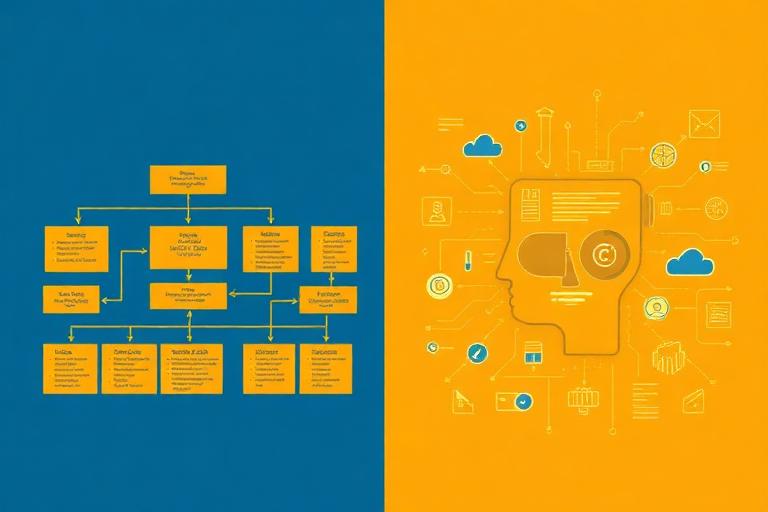
AI + Construction = Workflow First, Automation Second
The formula for AI success in construction is simple: get your workflows right first, then automate. Reversing the order wastes money and creates new problems.

The Difference Between Smart AI and Gimmick AI in Construction
Some AI in construction solves real problems. Some is just a marketing checkbox. Learning to tell the difference saves you money and prevents technology fatigue.

AI Without Process = Faster Chaos
AI accelerates whatever it's applied to. If your processes are chaotic, AI just creates chaos at machine speed. Process discipline must come before AI adoption.
AI Readiness Checklist for Contractors
Before spending money on AI, determine whether your company is actually ready to benefit from it. This checklist helps you assess your AI readiness honestly.

Why AI Works Best in Custom Systems
AI delivers the most value when it's embedded in systems built specifically for your operations. Generic AI on generic software produces generic results.
AI Should Fit the Work, Not Replace It
The best AI in construction enhances how your team works. It doesn't try to replace their expertise. Understanding this distinction prevents costly mistakes.

Construction AI That Actually Saves Time
Not all AI saves time. Some creates more work through bad outputs and management overhead. Here are the AI applications in construction that genuinely reduce workload.