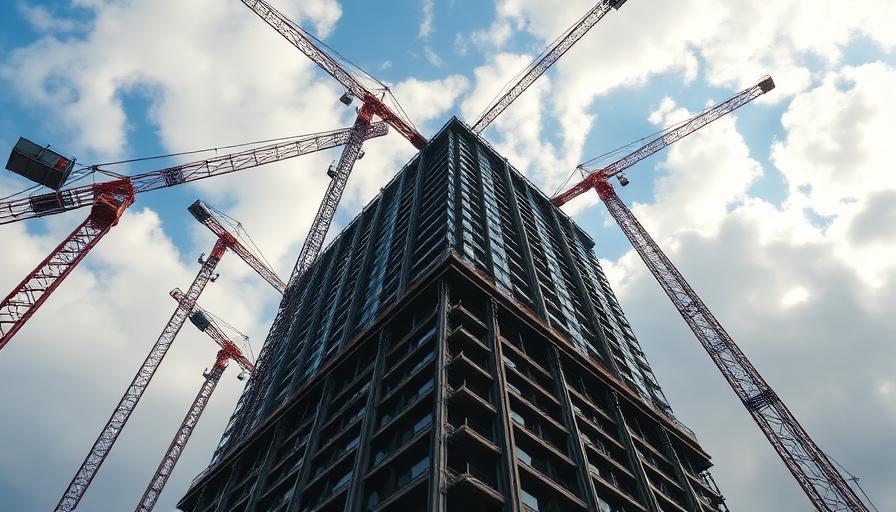
Building Software That Grows With Your Company
The software you build today needs to work when you're twice the size. Planning for growth in your construction technology prevents expensive rebuilds.
The Problem
Construction companies outgrow their software. The tools that worked at $10M in revenue create friction at $30M and break at $50M. This isn't unique to construction, but construction's project-based, distributed operations make the problem particularly acute.
Every time you outgrow your technology, you face an expensive transition: new software selection, data migration, team retraining, and months of reduced productivity. Building technology that anticipates growth prevents these costly transitions.
What Growth-Ready Software Looks Like
Flexible workflow logic. Approval chains that can add levels as your org chart grows. Routing rules that can accommodate new project types. Notification systems that scale from 10 people to 100 without manual reconfiguration.
Scalable data models. Database structures that can handle increasing volumes of projects, users, and transactions without performance degradation. Data models that can accommodate new fields and relationships without architectural changes.
Role-based architecture. Permission systems that can grow from "everyone sees everything" to granular role-based access as your organization becomes more structured.
Multi-entity support. If you might form subsidiaries, joint ventures, or multiple business units, your software should be able to accommodate separate entities with consolidated reporting.
API connectivity. Open APIs that allow your system to connect to new tools as your tech stack evolves.
Planning for Growth
Design for 3x your current size. When building custom software, design for three times your current project count, user count, and data volume. The incremental cost of this planning is minimal compared to a rebuild.
Build modular. Components that can be modified independently scale better than monolithic systems. When your approval workflow needs to change, you shouldn't have to rebuild your reporting system.
Document everything. Growth means new team members who need to understand and maintain the technology. Documentation isn't optional; it's a growth enabler.
Plan for the next integration. Even if you're not adding new tools today, build connection points that make future integrations easier.
The Checklist
Is your software growth-ready?
- Can you add new approval levels without developer involvement?
- Can you add new project types with new data requirements?
- Does performance hold with twice your current data volume?
- Can new roles and permissions be configured without code changes?
- Is the system documented enough for a new developer to understand?
- Can you integrate with new tools through APIs?
If any answer is no, address it before growth forces you to.
Ready to build a tech stack that fits your operation?
Let's talk about what your company actually needs.
Start the ConversationStack Exposure Calculator
Add up what you're actually paying for software subscriptions. No hidden multipliers, just your tools and your total.
See Your ExposureOperational Leakage Model
Estimate what your workflow structure costs in wasted time, duplicate effort, and labor leakage every month.
Model Your LeakageWe build this
More in Construction Tech Stack
Stop Hiring Developers. Start Architecting Your Construction Tech Stack.
AI made it easier to build software. That does not make it easier to design systems. Construction companies need architecture before they need code.

The Next 3 Years of Construction Tech: Why Workflow Architecture Wins
The construction industry is not behind on software. It is behind on system design. The next three years will expose that gap and separate the operators from the accumulators.

What Is a Construction Tech Stack (and Why It Matters)
Your tech stack is every piece of software, automation, and internal tool your operation runs on. Most contractors don't realize they already have one. It's just held together by duct tape.

How to Build a Construction Tech Stack That Actually Works
Building a tech stack isn't about buying the best software. It's about connecting the tools, workflows, and data your operation already depends on into something that works without constant babysitting.

Construction Tech Stack Examples: What Real Setups Look Like
Wondering what a construction tech stack actually looks like in practice? Here are real examples of how different types of contractors structure their technology.

Tech Stack for Contractors: What You Actually Need
Contractors don't need more software. They need the right combination of tools connected in a way that matches how their business actually operates.

Internal Software for Construction Companies: What It Is and Why It Works
Internal software is the technology your company builds for itself. It handles the workflows, processes, and data flows that no commercial platform was designed to address.
Custom Software for Contractors: When and Why to Build
Custom software isn't about being fancy. It's about building the specific tools your operation needs that nobody else is going to make for you.

Construction Workflow Software: What to Look For and What to Build
Workflow software for construction isn't just project management with a different label. It's the system that controls how information, decisions, and approvals move through your company.

Construction Automation Systems: What Can (and Should) Be Automated
Not everything in construction should be automated. But the manual processes that are eating your team's time and costing you money? Those are the ones to fix.

The Difference Between Tools and Systems
A tool solves one problem. A system connects problems and solutions into a functioning whole. Construction companies need systems, not more tools.

Software That Evolves With Your Business
Static software becomes a constraint as your business changes. The best construction technology is built to evolve alongside your operations.