Custom Software for Contractors: When and Why to Build
Custom software isn't about being fancy. It's about building the specific tools your operation needs that nobody else is going to make for you.
Custom Doesn't Mean Complicated
When contractors hear "custom software," they often picture massive enterprise systems with year long buildouts and seven figure price tags. That's not what we're talking about.
Custom software for contractors means building the specific tools your operation needs. A change order workflow that matches your approval chain. A dashboard that shows the exact metrics your leadership team looks at. A field reporting system designed around your project types.
These aren't massive undertakings. They're targeted solutions for specific problems that off the shelf software doesn't solve.
When Commercial Software Stops Working
Most contractors start with commercial platforms and they should. There's no reason to custom build accounting software or basic project management.
But every growing contractor reaches a point where their commercial tools can't keep up. The signs are consistent:
Your team works around the software instead of with it. They've developed workarounds because the tool doesn't match how your company actually operates. Spreadsheets that supplement the platform. Manual processes that fill gaps the software can't handle.
You're paying for three tools that each do half the job. None of them do exactly what you need, so you use pieces of each and manually bridge the gaps.
Your admin staff is the integration layer. People spend their days moving data between systems because nothing connects automatically.
Critical processes live outside your software. Your most important workflows happen in email, text messages, and phone calls because the formal system can't accommodate them.
When you see these patterns, commercial software has reached its ceiling for your operation.
What Custom Software Actually Costs
The assumption that custom software is prohibitively expensive is outdated. Modern development approaches have brought costs down significantly.
A targeted internal tool, something like a custom change order workflow or an automated reporting dashboard, can often be built and deployed in weeks, not months. The cost is typically comparable to what companies are already spending on SaaS subscriptions, admin labor for manual workarounds, and lost productivity from broken processes.
The question isn't whether you can afford custom software. It's whether you can afford to keep paying the hidden costs of not having it.
What to Build First
Don't try to build everything at once. Start with the workflow that causes the most pain and costs the most money.
For most contractors, that's one of these:
Change order management. The process of tracking, approving, and accounting for scope changes. This is almost always partially manual and almost always a source of lost revenue.
Field to office communication. Getting field data into office systems without manual re entry. Daily reports, safety observations, progress photos, quality issues.
Financial visibility. A real time view of project profitability that doesn't require someone to compile a report. Pulling data from your PM system and your accounting system into one view.
Pick one. Build it. Prove the value. Then build the next one.
The Build vs. Buy Framework
For any given need, ask three questions:
Is this a commodity function? Things like basic accounting, email, and file storage are commodity functions. Buy these. There's no competitive advantage in building your own accounting software.
Is this specific to our company? Your approval chains, your reporting requirements, your workflow routing. These are specific to you. If the process is unique to your company, the tool probably needs to be unique too.
Does an off the shelf tool do this well enough? Sometimes a commercial platform handles 90% of what you need and the remaining 10% isn't worth building for. Be honest about the gap. If it's small enough, live with it. If it's costing you real money, build.
What Good Custom Software Looks Like
Good custom software for contractors shares a few characteristics:
It's simple to use. Your field teams and PMs shouldn't need training sessions. If the tool isn't intuitive, people won't use it.
It connects to what you already have. Custom software should integrate with your existing tools, not replace them. It fills gaps. It doesn't create new silos.
It evolves with your business. Your processes will change. Your custom software needs to be maintainable and updatable, not a one time build that becomes legacy code.
It solves one problem well. The best internal tools are focused. They do one thing and they do it right. Feature creep is the enemy of adoption.
The Bottom Line
Custom software for contractors is about building the operational tools that make your specific business run better. Not technology for its own sake. Tools that solve real problems your team faces every day.
The companies that figure this out gain a real operational advantage. Their information flows faster. Their people spend less time on busywork. Their leadership has better visibility. And their competitors are still managing by spreadsheet.
Ready to build a tech stack that fits your operation?
Let's talk about what your company actually needs.
Start the ConversationStack Exposure Calculator
Add up what you're actually paying for software subscriptions. No hidden multipliers, just your tools and your total.
See Your ExposureOperational Leakage Model
Estimate what your workflow structure costs in wasted time, duplicate effort, and labor leakage every month.
Model Your LeakageWe build this
More in Construction Tech Stack
Stop Hiring Developers. Start Architecting Your Construction Tech Stack.
AI made it easier to build software. That does not make it easier to design systems. Construction companies need architecture before they need code.

The Next 3 Years of Construction Tech: Why Workflow Architecture Wins
The construction industry is not behind on software. It is behind on system design. The next three years will expose that gap and separate the operators from the accumulators.

What Is a Construction Tech Stack (and Why It Matters)
Your tech stack is every piece of software, automation, and internal tool your operation runs on. Most contractors don't realize they already have one. It's just held together by duct tape.
How to Build a Construction Tech Stack That Actually Works
Building a tech stack isn't about buying the best software. It's about connecting the tools, workflows, and data your operation already depends on into something that works without constant babysitting.

Construction Tech Stack Examples: What Real Setups Look Like
Wondering what a construction tech stack actually looks like in practice? Here are real examples of how different types of contractors structure their technology.
Tech Stack for Contractors: What You Actually Need
Contractors don't need more software. They need the right combination of tools connected in a way that matches how their business actually operates.

Internal Software for Construction Companies: What It Is and Why It Works
Internal software is the technology your company builds for itself. It handles the workflows, processes, and data flows that no commercial platform was designed to address.

Construction Workflow Software: What to Look For and What to Build
Workflow software for construction isn't just project management with a different label. It's the system that controls how information, decisions, and approvals move through your company.

Construction Automation Systems: What Can (and Should) Be Automated
Not everything in construction should be automated. But the manual processes that are eating your team's time and costing you money? Those are the ones to fix.
The Difference Between Tools and Systems
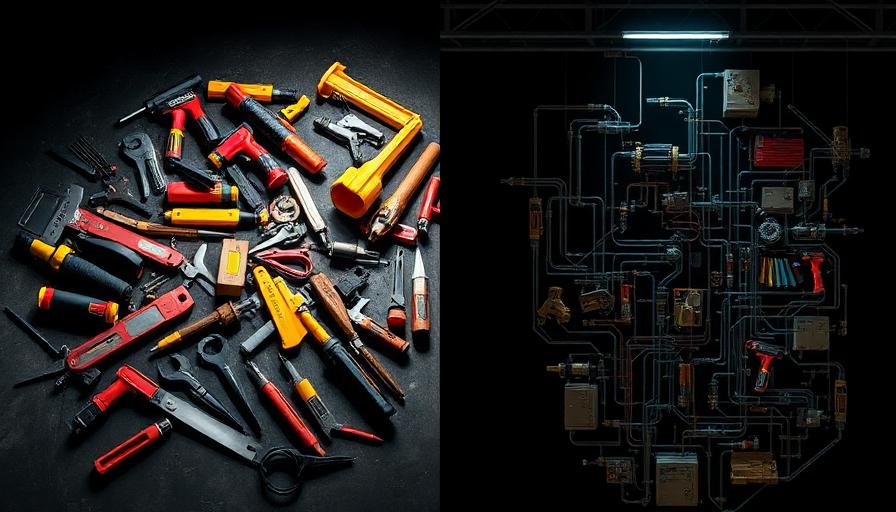
A tool solves one problem. A system connects problems and solutions into a functioning whole. Construction companies need systems, not more tools.

Software That Evolves With Your Business
Static software becomes a constraint as your business changes. The best construction technology is built to evolve alongside your operations.
Building Software That Grows With Your Company
The software you build today needs to work when you're twice the size. Planning for growth in your construction technology prevents expensive rebuilds.